- Home
- Main Catalog
- Mobiles
- Smart Phone
- Google Pixel 9 Pro
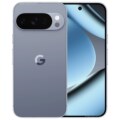
Google Pixel 9 Pro Price in Bangladesh 2026
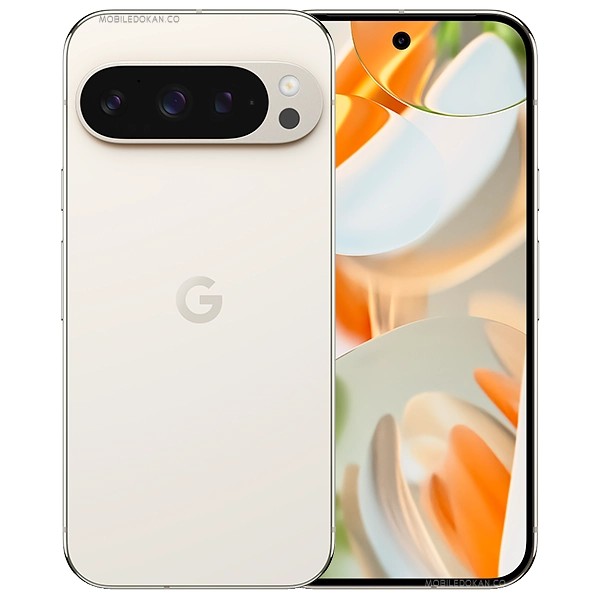
- Camera: 50MP 2160p
- RAM: 16GB RAM Google Tensor G4
- Battery: 4700mAh 27W 21W
- SIM: Nano-SIM and/or eSIM
- OS: Android 14, up to 7 major Android upgrades
- Display: 6.3" 1280x2856 pixels
Google Pixel 9 Pro full specs, rating & review
General
| Model | Pixel 9 Pro |
| Device Type | Smartphones |
| Announced | 2024, August 13 |
| Status | Available. Released 2024, September 09 |
| Brand | |
| Added | August 13, 2024 |
| Updated | July 17, 2025 |
Back Camera
| Triple |
50 MP, f/1.7, 25mm (wide), 1/1.31", 1.2µm, dual pixel PDAF, OIS 48 MP, f/2.8, 113mm (periscope telephoto), 1/2.55", dual pixel PDAF, OIS, 5x optical zoom 48 MP, f/1.7, 123˚ (ultrawide), 1/2.55", dual pixel PDAF |
| Features | Dual-LED flash, Pixel Shift, Ultra-HDR, panorama, Best Take |
| Video | 8K@30fps, 4K@24/30/60fps, 1080p@24/30/60/120/240fps; gyro-EIS, OIS, 10-bit HDR |
Selfie Camera
| Single | 42 MP, f/2.2, 17mm (ultrawide), PDAF |
| Features | HDR, panorama |
| Video | 4K@30/60fps, 1080p@30/60fps |
Body & Design
| Dimensions | 152.8 x 72 x 8.5 mm (6.02 x 2.83 x 0.33 in) |
| Weight | 199 g (7.02 oz) |
| Build Describes the construction materials, methods and finishes used by the manufacturer when building a phone. | Glass front (Gorilla Glass Victus 2), glass back (Gorilla Glass Victus 2), aluminum frame |
| Others | IP68 dust/water resistant (up to 1.5m for 30 min) |
| SIM SIM (Subscriber Identity Module) is a small card that contains mobile network subscriber's account information. This allows the phone using the card to attach to a mobile network. The SIM card is most commonly associated with GSM and UMTS mobile networks. Moving a SIM card from one phone to another allows a subscriber to switch mobile phones without having to contact their mobile network carrier. SIM cards can also be used by a phone to store limited amounts of data, such as phone numbers and text messages. | Nano-SIM and/or eSIM |
Network
| Technology | GSM / HSPA / LTE / 5G |
| 2G Network | GSM 850 / 900 / 1800 / 1900 |
| 3G Network | HSDPA 850 / 900 / 1700(AWS) / 1900 / 2100 |
| 4G Network | 1, 2, 3, 4, 5, 7, 8, 12, 13, 14, 17, 18, 19, 20, 25, 26, 28, 29, 30, 38, 40, 41, 48, 66, 71 - GR83Y1, 2, 3, 4, 5, 7, 8, 12, 13, 14, 17, 18, 19, 20, 21, 25, 26, 28, 29, 30, 32, 38, 39, 40, 41, 42, 48, 66, 71, 75 - GEC77 |
| 5G Network | 1, 2, 3, 5, 7, 8, 12, 14, 20, 25, 26, 28, 29, 30, 38, 40, 41, 48, 66, 70, 71, 77, 78, 258, 260, 261 SA/NSA/Sub6/mmWave - GR83Y1, 2, 3, 5, 7, 8, 12, 14, 20, 25, 26, 28, 30, 38, 40, 41, 66, 71, 75, 76, 77, 78, 79 SA/NSA/Sub6 - GEC77 |
| Speed | HSPA, LTE-A (CA), 5G |
Hardware
| Operating System (OS) OS => Every computer system run on a base software called Operating System (OS). Operating System controls all basic operations of the computer (such as smartphone, PDAs, tablet computers and other handheld devices). The Operating System allows the user to install and run third party applications (apps), apps are used to add new functionality to the device. | Android 14, upgradable to Android 15, up to 7 major Android upgrades |
| Processor (CPU) | Octa-core (1x3.1 GHz Cortex-X4 & 3x2.6 GHz Cortex-A720 & 4x1.92 GHz Cortex-A520) |
| Chipset Chipset is a group of integrated circuits designed to perform one or a more dedicated functions, often with real time computing constraints, Popular smartphones are equipped with more advanced embedded chipsets that can do many different tasks depending on their programming. | Google Tensor G4 (4 nm) |
| RAM | 16 GB |
| Internal (ROM) | 128/256/512 GB / 1TB |
| Card Slot Memory Card Slot is a special slot for inserting a memory card. Memory cards allow you to expand the phone's built-in memory, A memory card (sometimes called a flash memory card or a storage card) is a small storage medium used to store data such as text, pictures, audio, and video, for use on small, portable or remote computing devices such as mobile phones, mp3 players, digital cameras. | No |
| GPU GPU (Graphics Processing Unit) is a single-chip processor designed to rapidly manipulate and alter memory to accelerate the creation of images in a frame buffer intended for output to a display, This includes things such as lighting effects, object transformations, and 3D motion. | Mali-G715 MC7 |
| Variant | 16GB 128GB / 16GB 256GB / 16GB 512GB / 16GB 1TB |
Display
| Display Type Display Technology => A number of display technologies and types used in mobile phones => TFT (Thin Film Transistor), IPS (In-Place Switching), OLED (Organic Light Emitting Diode), AMOLED (Active-Matrix Organic Light-Emitting Diode), Super AMOLED (an even advanced version of AMOLED), Resistive Touchscreen (Resistive touchscreens contain two layer of conductive material with a very small gap between them which acts as a resistance), Capacitive Touchsceen (Capacitive touchscreen technology consists of a layer of glass coated with a transparent conductor) | LTPO OLED, 120Hz, HDR10+, 2000 nits (HBM), 3000 nits (peak) |
| Size | 6.3 inches, 96.3 cm2 (~87.6% screen-to-body ratio) |
| Resolution | 1280 x 2856 pixels, 20:9 ratio (~495 ppi density) |
| Display Protection Display Protection => Gorilla Glass is a special alkali-aluminosilicate glass shield with exceptional damage resistance that helps protect mobile displays from scratches, drops, and bumps of everyday use, It is always better to go for a smartphone with Gorilla Glass for that added protection and peace of mind. | Corning Gorilla Glass Victus 2 |
Multimedia
| Loudspeaker | Yes, with stereo speakers |
| 3.5mm Jack | No |
Connectivity
| WLAN ( Wi-fi) Wireless Local Area Network (WLAN) is a method of distributing data wirelessly to a local area network practically to the internet. It is a popular wireless networking technology using radio waves to provide high-speed network connections that allow devices to communicate without cords or cables, Wi-Fi is increasingly becoming the preferred mode of internet connectivity all over the world. | Wi-Fi 802.11 a/b/g/n/ac/6e/7, tri-band, Wi-Fi Direct |
| Bluetooth Bluetooth is a wireless communications technology for exchanging data between mobile phones, headsets, computers and other network devices over short distances without wires, Bluetooth technology was primarily designed to support simple wireless networking of personal consumer devices. | 5.3, A2DP, LE, aptX HD |
| GPS GPS The Global Positioning System is a satellite-based radio navigation system, GPS permits users to determine their position, velocity and the time 24 hours a day, in all weather, anywhere in the world, In order to locate your position, your device or GPS receiver must have a clear view of the sky. | GPS (L1+L5), GLONASS (G1), GALILEO (E1+E5a), QZSS (L1+L5) |
| NFC NFC (Near field communication) is a set of standards for smartphones and similar devices to establish peer-to-peer radio communications with each other by touching them together or bringing them into proximity, usually no more than a few inches. | |
| FM Radio | No |
| USB | USB Type-C 3.2 |
Features
| Sensors Sensors are electronic components that detects and responds to some type of input from the physical environment. The specific input could be light, heat, motion, moisture, pressure and location, The output is generally a signal that is converted to use in computing systems, a location sensor, such as a GPS receiver is able to detect current location of your electronic device. | Fingerprint (under display, ultrasonic), accelerometer, gyro, proximity, compass, barometer, thermometer (skin temperature)Ultra Wideband (UWB) supportSatellite SOS serviceCircle to Search |
Battery
| Battery Type Battery Type => Cell phones run on various kinds of batteries depending on the manufacturer, phone size or shape and features. There are basically four types of cell phone batteries => Lithium Polymer, Lithium Ion, Nickel Metal Hydride and Nickel Cadmium. | Non-removable Li-Po |
| Capacity Battery Capacity is a measure (typically in Amp-hr) of the charge stored by the battery, and is determined by the mass of active material contained in the battery. The battery capacity represents the maximum amount of energy that can be extracted from the battery under certain conditions. | 4700 mAh |
| Charging |
27W wired, PD3.0, PPS, 55% in 30 min21W wireless (w/ Pixel Stand)12W wireless (w/ Qi compatible charger)Reverse wireless Bypass charging (w/ "Limit to 80%" option enabled) |
Other
| Made By | US |
| Colors | Porcelain, Rose Quartz, Hazel, Obsidian |
| Models | GR83Y, GEC77, GWVK6 |
Explanation of Google Pixel 9 Pro
Google Pixel 9 Pro specifications, price and key features.